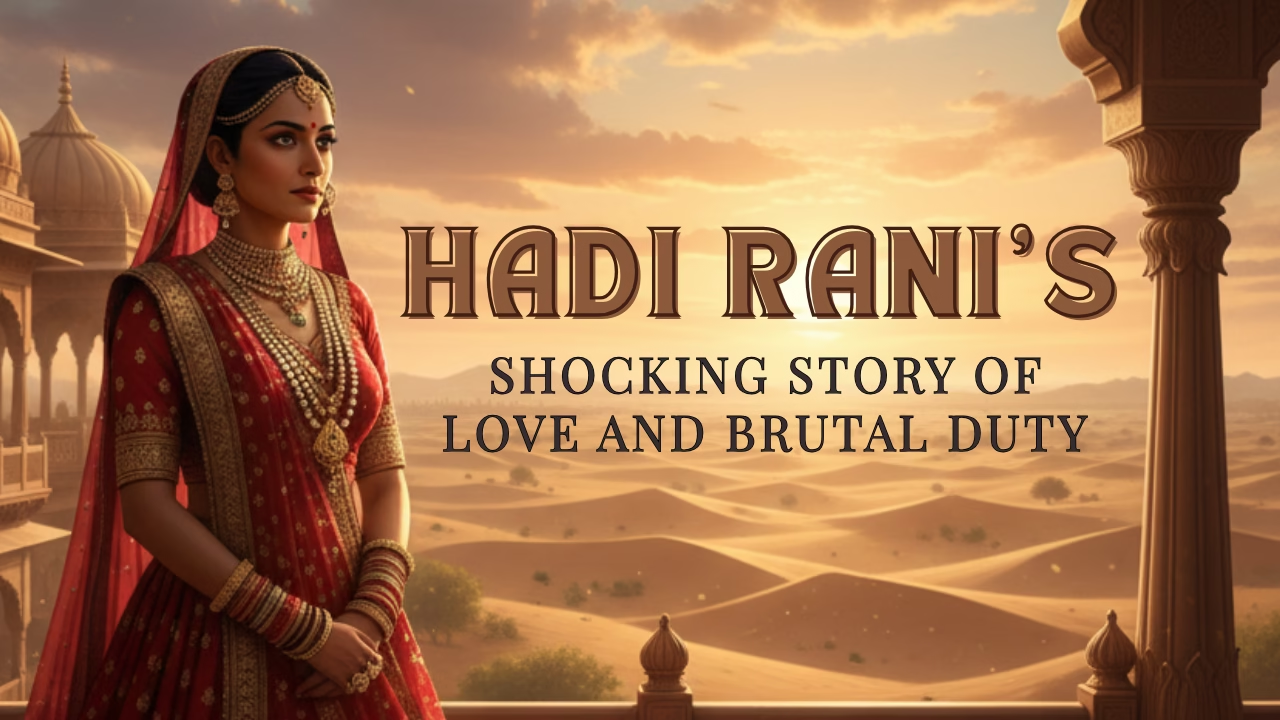
Have you ever come across a love story so intense, so tragic, that it makes you stop and wonder what real devotion truly means? We often talk about Romeo and Juliet or the great romances of history, but hidden deep in the sands of Rajasthan lies a tale that outshines them all in sheer courage and heartbreak.
This is the story of Hadi Rani, a newlywed queen from the 17th century whose sacrifice still echoes through the folk songs of Rajasthan, yet barely finds a mention in our mainstream history books. She wasn’t just a queen; she became a symbol of Rajput honour — choosing duty over personal happiness in the most unimaginable way.
Her tale isn’t just about love — it’s about love tested by war, loyalty tested by blood, and duty tested by life itself. In a world where personal choices often clash with greater responsibilities, Hadi Rani’s story makes us ask: what would we choose if we stood in her place?
Table of Contents
Who Was Hadi Rani? – A Glimpse Into Her World
Before we get to her shocking sacrifice, let’s step into Hadi Rani’s world. Rajasthan in the 17th century wasn’t just desert forts and jewelled palaces — it was a land where honour often outweighed life itself. The Rajput clans lived by a strict code of loyalty, valour, and sacrifice.
Hadi Rani was married to Ratan Singh Chundawat, the noble chieftain of Salumbar in Mewar (present-day Rajasthan). Their marriage was still new when history pulled them apart. Imagine being newlywed — your life just beginning — yet fate already demanding a test of devotion.
DID YOU KNOW?
The Rajput concept of maryada (honour) was so deeply ingrained that even queens were expected to put duty before desire. For a Rajput woman, loyalty to her husband and his dharma wasn’t just personal — it was a sacred responsibility
But Hadi Rani wasn’t just a symbol of duty; she was also a young bride, caught between love and destiny. While little is recorded about her life before the fateful incident, local folklore remembers her as a woman of rare beauty and unwavering strength — a quiet yet powerful presence in the Rajputana courts.
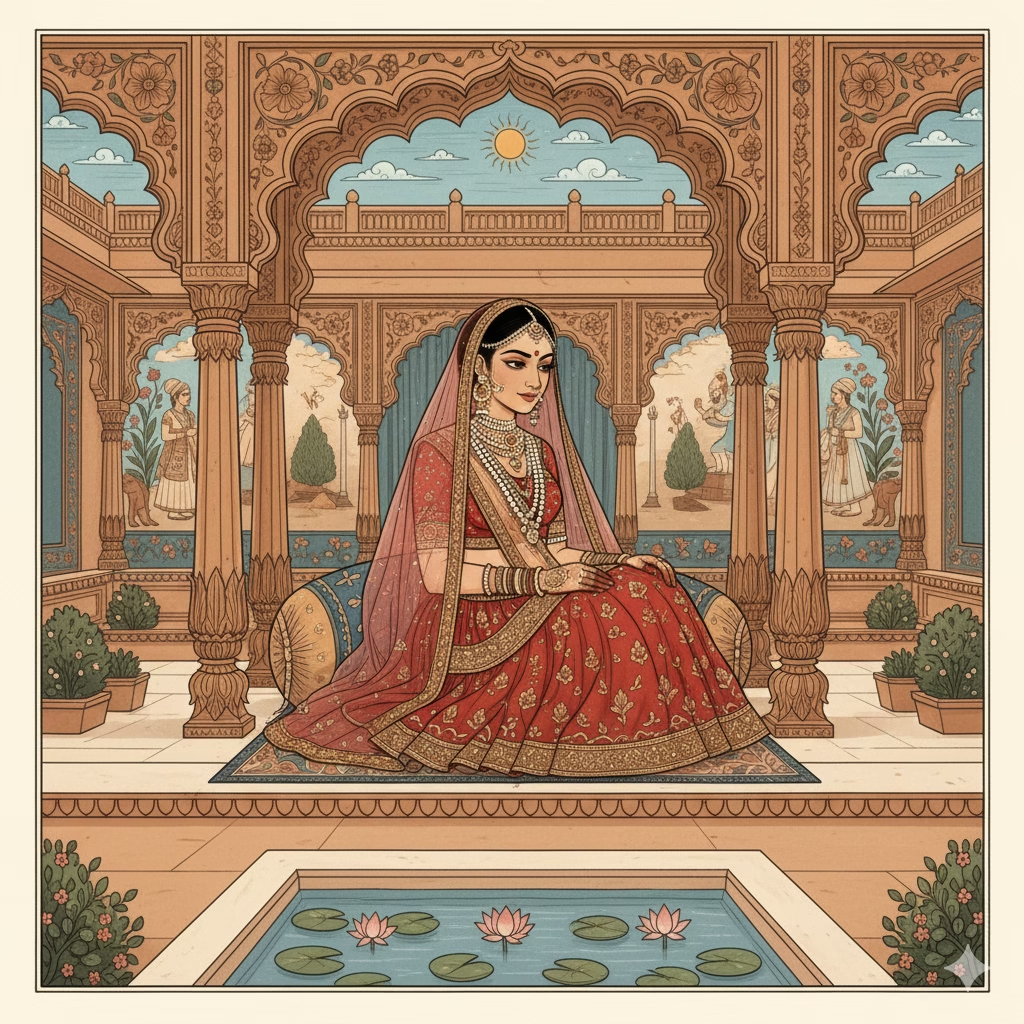
This backdrop of deeply rooted cultural values is important, because without it, her decision might look unthinkable to us today. But in her time, it was a choice shaped by the spirit of her people.
[AMAZON AFFILIATE]
Want to read more about Rajasthan’s royal women? This book on Rajput queens gives a fascinating glimpse into their lives. Check it out on Amazon ➝
“As an Amazon Associate we earn from qualifying purchases that helps us bring more such stories to you”
The Mughal Threat and Call to War
Seventeenth-century Rajasthan was no stranger to conflict. The Mughal Empire, under Emperor Aurangzeb, had tightened its grip over northern India, pushing its influence deeper into Rajputana. For the Rajput chiefs, this wasn’t just about politics — it was about survival, identity, and their centuries-old pride in independence.
Hadi Rani’s husband, Ratan Singh Chundawat of Salumbar, was among those called upon to join the resistance against the Mughals. The kingdom of Mewar, long known for its defiance (remember Maharana Pratap?), could not afford hesitation when Aurangzeb’s armies threatened its frontiers.
But here’s the twist — Ratan Singh was torn. He had just married Hadi Rani, and their union was fresh, filled with the tenderness of new beginnings. The thought of leaving his young bride behind to march into a bloody battlefield weighed heavily on him.
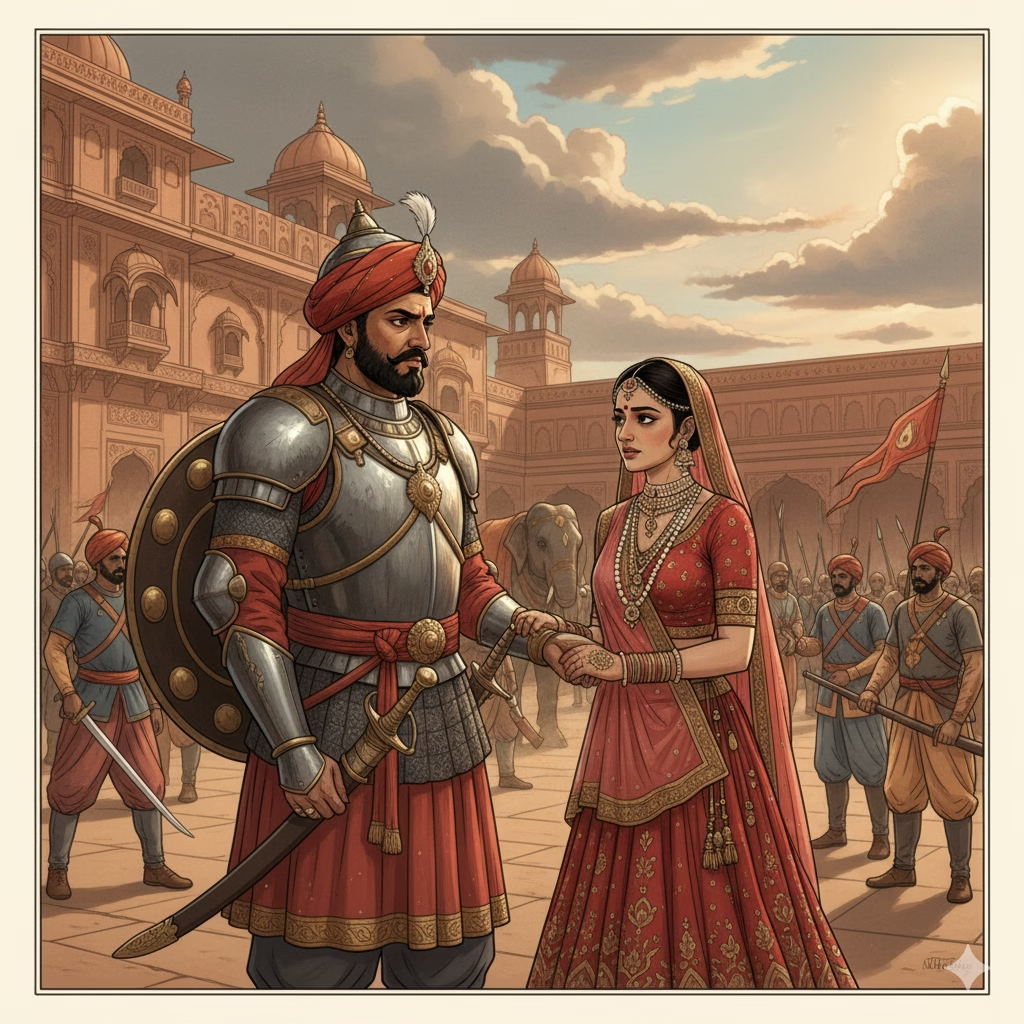
Have you ever faced a choice where your heart pulled one way but duty demanded another?
That was Ratan Singh’s dilemma — love versus loyalty, personal happiness versus Rajput honour.
In Rajput tradition, hesitation before war was frowned upon. A leader’s resolve inspired his men, and doubt could spell defeat before the first sword was drawn. This is where Hadi Rani’s story takes its dramatic turn.
QUICK FACT
The Rajputs of Mewar had a long history of defying the Mughals, from Rana Sanga’s resistance against Babur (Battle of Khanwa) to Maharana Pratap’s legendary battles against Akbar (Battle of Haldighati).
Hadi Rani’s sacrifice fits into this broader tradition of courage.
The Shocking Sacrifice of Hadi Rani
This is where history turns from romance to tragedy. When Ratan Singh hesitated to march into battle, torn between his duty to his kingdom and his love for his new bride, Hadi Rani made a decision that would shock even the bravest warriors of Rajputana.
She understood that her husband’s soldiers looked to him for strength, and his doubt — his attachment — could weaken their resolve. To remove that hesitation, she chose the unthinkable.
Imagine this: a young queen, barely married, deciding that her life was a small price compared to her husband’s honour and his duty to Mewar.
According to folklore and Rajasthani ballads, Hadi Rani ordered her maids to prepare her as a bride one last time. Dressed in full wedding attire, adorned with jewellery and sindoor, she took a blade and beheaded herself. Her severed head, placed on a tray, was sent to her husband with a chilling yet powerful message —
“Now you have nothing to hold you back. Go, fight with honour.”
For us today, this act may sound horrifying, even unimaginable. But in the Rajput code of ethics, this was seen as supreme devotion — a sacrifice not of despair, but of duty, dharma, and love intertwined.
DID YOU KNOW?
In Rajasthan, her act is remembered not as suicide, but as an immortal sacrifice, comparable to the Rajput warriors who chose saka (ritual death in battle) or jauhar (self-immolation) rather than surrender.
Her story raises uncomfortable yet profound questions: how far can love and duty stretch? Where does personal happiness end, and collective responsibility begin?
Aftermath – Ratan Singh’s Response
When Ratan Singh received the tray with his bride’s severed head, the world must have stood still. For a moment, he was not a warrior or a commander — he was a husband, shattered by the unimaginable sacrifice of the woman he loved.
DID YOU KNOW?
In Rajasthan, her act is remembered not as suicide, but as an immortal sacrifice, comparable to the Rajput warriors who chose saka (ritual death in battle) or jauhar (self-immolation) rather than surrender.
But along with grief came something else: an unshakable fire. Hadi Rani had removed his doubt, leaving him with nothing to lose and everything to fight for. He tied her head around his neck, right at his chest, so her presence would march with him into battle.
Can you imagine the scene? A Rajput chief, leading his men into war, carrying not a banner but the severed head of his bride — her final act fuelling his courage. It wasn’t just symbolic; it was a message to his soldiers that hesitation had no place on the battlefield.
With his spirit blazing, Ratan Singh led his troops against the Mughal forces. He fought with such valour that his men drew strength from him, charging with a ferocity that echoed across the battlefield. But like many Rajput tales, this too ended in martyrdom. Ratan Singh fell in combat, but not before proving that Rajput honour was worth more than life itself.
QUICK FACT
In Rajputana tradition, martyrdom in battle was celebrated as victory, because it upheld the honour of the clan and kingdom. For Rajputs, dying with courage was preferable to living in compromise.
The love and sacrifice of Hadi Rani and Ratan Singh became entwined forever, etched into the cultural memory of Rajasthan as a story of devotion, duty, and fearless honour.
Folklore, Ballads, and Cultural Memory
If history books barely mention Hadi Rani, then how do we know her story today? The answer lies in Rajasthan’s folk traditions. Long before printing presses and classrooms, stories of courage travelled through songs sung by bards, ballads performed in village squares, and whispered legends passed from one generation to the next.
In Rajasthan, charans (traditional bards) and bhopas (folk singers) kept her memory alive. Even today, in some villages, you’ll hear verses about the queen who gave her life so her husband could march fearlessly into war. These songs are not just entertainment; they are living history, reminding communities of values that shaped Rajputana — honour, loyalty, sacrifice.
While legends like Maharana Pratap or Padmini often dominate the spotlight, Hadi Rani remains more of a local icon than a national figure. Yet, for the people of Mewar, her name is spoken with reverence — proof that cultural memory doesn’t always depend on written records.
QUICK CULTURAL NOTE
Folk performances like Pabuji ki Phad (scroll painting recitations) show how deeply Rajasthani culture intertwines history, art, and storytelling. Though Hadi Rani doesn’t have her own phad, her story survives in oral poetry and ballads.
By remembering her through folklore, Rajasthan ensures that her sacrifice was not in vain — she lives not in stone inscriptions, but in the voices of the people.
And speaking of stone inscriptions, have you checked out our digital magazine Echoes in Stone? It dives deep into the fascinating carvings, symbols, and stories etched across India’s timeless monuments.
If Hadi Rani’s tale moved you, you’ll love the treasures waiting inside.
Explore Echoes in Stone here ➝
Why Hadi Rani’s Story Still Matters Today
Centuries may have passed since Hadi Rani’s sacrifice, but her story still feels strikingly relevant. In an age where choices are often about convenience, her decision reminds us of values that once stood at the heart of life — loyalty, courage, and responsibility beyond the self.
Her tale forces us to reflect: how do we balance personal emotions with larger duties? While few of us will ever face a choice as extreme as hers, we constantly juggle between what our hearts want and what our responsibilities demand — whether in family, career, or society.
DID YOU KNOW?
Historians argue that forgotten figures like Hadi Rani offer a more complete picture of India’s past. By remembering them, we don’t just honour their memory — we also challenge the selective history that often leaves women’s sacrifices in the shadows.
In today’s world, where conversations about women’s empowerment often highlight breaking barriers, Hadi Rani’s story shows a different dimension: women as keepers of honour, strength, and resilience in times of war. Her choice may not align with modern ideals, but it still compels respect for the power of conviction.
If we forget stories like hers, we lose not only history but also the values that shaped generations. That’s why platforms like our digital magazine, Echoes in Stone, are dedicated to reviving such forgotten voices — whether carved into inscriptions, sung in ballads, or buried in folklore. Discover more stories inside ➝ Whispers of Bharat Magazine
Conclusion – Remembering the Queen of Courage
Hadi Rani’s story is not just a tale of the past — it’s a timeless reminder of how far love and duty can be tested. She was a newlywed bride who could have chosen comfort, but instead, she embraced sacrifice to ignite her husband’s courage and uphold the honour of her people.
In a world that often forgets its unsung heroes, her name deserves to be spoken alongside the great legends of India. She may not be in every textbook, but she lives on in the songs of Rajasthan, the pride of Mewar, and now — in the hearts of all who hear her story.
👉 The next time you visit a fort, hear a ballad, or see a Rajput painting, let’s remember women like Hadi Rani, whose courage shaped the soul of India.
If this story moved you, help us keep such legacies alive —
- Share this article with others who love history.
- Explore more untold stories in our digital magazine Echoes in Stone.
Because stories like Hadi Rani’s should never fade into silence — they are part of the living heartbeat of Bharat.


