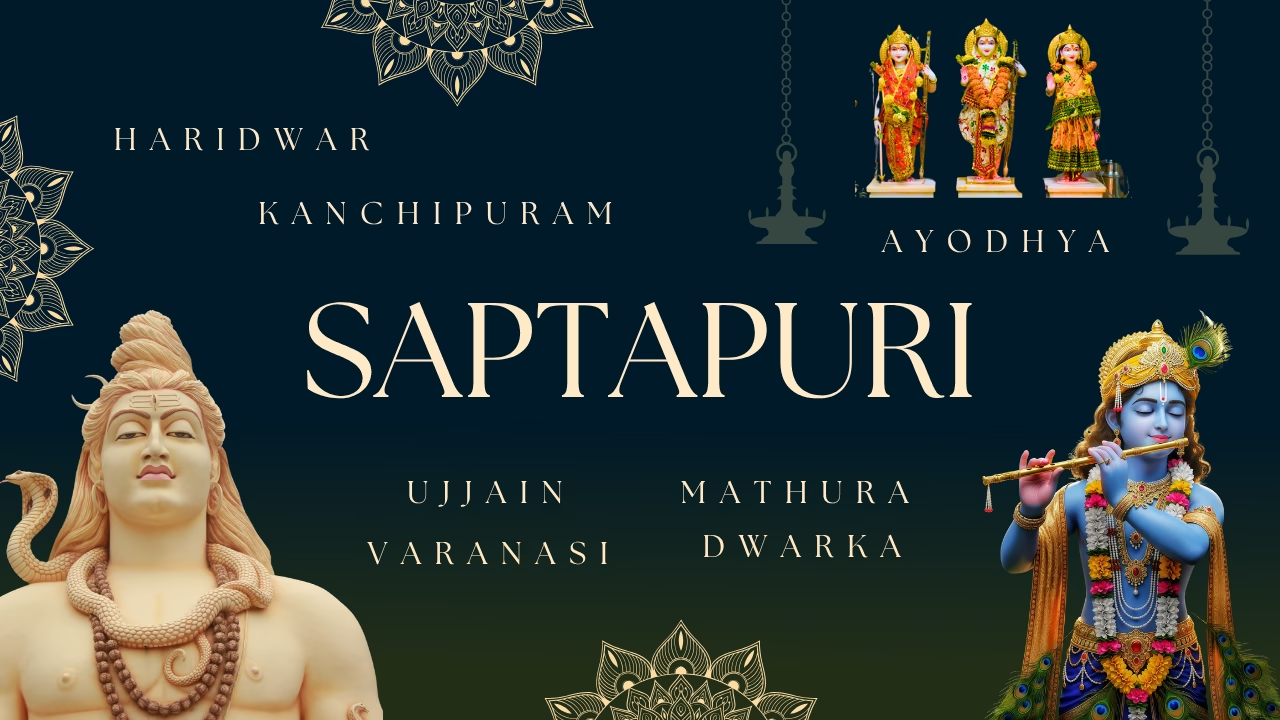
“In seven cities, the earth seems to breathe a secret — if you listen, your soul might hear it.”
If you’ve ever wondered how geography and spirituality weave together in India, then the “Sapta Puri: 7 Eternal Cities That Whisper the Secrets of Moksha” is your map through time, myth, and eternal hope.
In Hindu tradition, there is a concept known as Sapta Moksha Puri (or Sapta Puri) — the seven sacred cities believed to grant moksha (liberation from the cycle of rebirth) to the soul that visits or leaves its body there.
A famous shloka from the Garuda Purana (16.114) names them:
ayodhya-mathura-maya kashi-kanchi-avantika | puri-dwaravati chaiva saptaite mokṣadāyikā
which means “Ayodhya, Mathura, Maya (= Haridwar), Kashi, Kanchi, Avantika (= Ujjain), and Dwaravati (Dwarka) — these seven bestow moksha.”
These are not merely pilgrimage points; each city is a living tapestry of myth, history, architecture, and belief — and each whispers a different pathway toward liberation.
Let me tell you a small moment:
On a misty dawn in Varanasi, when the first rays of the sun colour the Ganges a molten gold — I stood on Dashashwamedh Ghat, watching pilgrims release diyas (floating lamps) into the current. A local priest whispered to me that “in Kashi, death becomes a final yoga — a union.” That phrase — death becomes yoga — has stayed with me. Over centuries, countless seekers have believed that merely by departing the world in Kashi, one attains moksha.
If that idea intrigues you, then you’re in the right place. Let’s begin the voyage — first stop: Ayodhya.
Table of Contents
1. Ayodhya — The City of Divine Birth
If you walk through Ayodhya at sunrise, the air itself hums with stories. The temple bells from Hanuman Garhi echo softly over the Sarayu River, and the saffron flags dance like they remember something ancient — something divine.
Ayodhya, whose very name means “the unconquerable”, isn’t just another city on the map. It is believed to be the birthplace of Lord Rama, the seventh avatar of Vishnu, whose life became the Ramayana — a scripture that still shapes the conscience of Bharat.
Ayodhya’s aura isn’t just divine — it’s deeply moral. The very soil is said to remind one of “Maryada Purushottam”, the ideal man who upheld truth and duty above all. When locals narrate Rama’s story, they don’t just tell it — they live it.
Every lane still echoes with the Ramcharitmanas being recited in homes, and every traveller finds a corner of peace near the Sarayu River, where thousands still take a holy dip at dawn.
They say — if you bathe here with pure intent, your karma dissolves like the ripples fading into light.
Sacred Spots to Visit
- Ram Janmabhoomi Temple – A magnificent reconstruction of faith, now standing as a symbol of India’s cultural revival.
- Hanuman Garhi – A fortress-temple where Hanuman is said to have watched over Ayodhya while Lord Rama ruled.
- Kanak Bhawan – A palace said to be gifted to Sita by Queen Kaikeyi, adorned in gold interiors that gleam like sunlight.
In the Sanatan tradition, Ayodhya represents Dharma — righteous living. Liberation here isn’t through withdrawal, but through right action and truth. It teaches that moksha isn’t escape — it’s alignment.
Many pilgrims believe that dying in Ayodhya or immersing one’s ashes in the Sarayu River grants freedom from the cycle of birth and death. Whether you see it as symbolism or sanctity, Ayodhya continues to be a spiritual bridge between faith and finality.
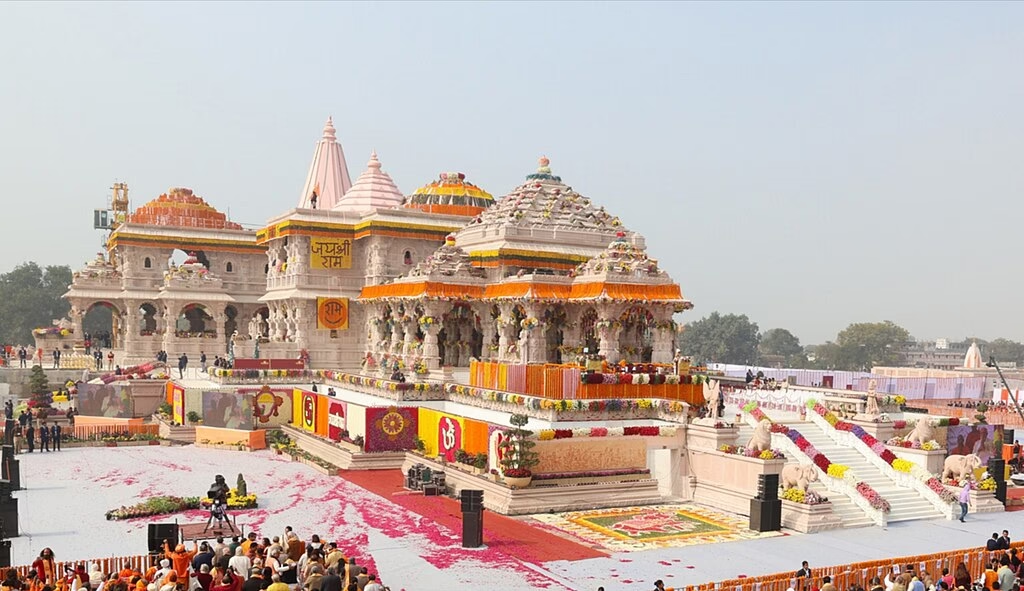
Image Credit: Prime Minister’s Office (GODL-India), GODL-India, via Wikimedia Commons
https://commons.wikimedia.org/wiki/File:Ayodhya_Ram_Mandir_Inauguration_Day_Picture.jpg
[AMAZON AFFILIATE]
BRINGING A PIECE OF AYODHYA HOME
There’s something about Ayodhya that lingers with you — the fragrance of sandalwood in the temples, the flicker of lamps by the Sarayu, the quiet sense of purity that seeps into your soul. If you’ve ever wanted to carry a part of that peace back home, there are a few sacred symbols that capture its essence beautifully.
A brass Ram Darbar idol can be a perfect start — not as décor, but as a reminder of the harmony between duty, love, and faith that Ayodhya stands for. I keep a small one on my writing desk; somehow it keeps me cantered on long, chaotic days. [Check it out on Amazon ➝]
If you light sandalwood dhoop cones nearby, your space begins to smell like the evening aarti at Hanuman Garhi — soft, grounding, ancient. [Check it out on Amazon ➝]
“As an Amazon Associate we earn from qualifying purchases that helps us bring more such stories to you”
2. Mathura — Where Love Becomes Liberation
If Ayodhya is the city of duty, Mathura is the city of love — a love so divine that it dissolves the boundaries between human and eternal. The air here feels different; sweet, musical, like it remembers the sound of Krishna’s flute echoing across the Yamuna.
Mathura isn’t just a place you visit — it’s an emotion you experience. Every corner hums with the rhythm of devotion. Street vendors call out “Radhe Radhe” instead of hello, and every ghat seems to hold a whisper of the leelas (divine plays) of Krishna.
According to ancient tradition, this is where Lord Krishna, the eighth avatar of Vishnu, was born in the dark prison cell of King Kansa — a story that still stirs every heart that hears it. The Krishna Janmabhoomi Temple, built on that sacred ground, stands as a reminder that even in chains, divinity can be born.
DID YOU KNOW?
Mathura’s name appears in the Varaha Purana and Padma Purana as one of the Sapta Moksha Puris — cities that can grant liberation to those who die or meditate here. In these texts, Mathura is celebrated as the place where bhakti (devotion) transcends ritual. Here, love itself becomes the path to Moksha.
It’s said that Krishna’s leelas were not mere stories, but lessons in divine connection — how love can be so pure that it frees the soul from desire itself. Standing at Vishram Ghat, where Krishna is believed to have rested after slaying Kansa, you can feel that paradox of power and tenderness.
Pilgrims still take a dip in the Yamuna’s shimmering waters, believing it washes away not just sin but sorrow — leaving only devotion behind.
Long before Mathura became a temple town, it was a thriving center of art and sculpture during the Kushan Empire. The world-famous Mathura School of Art gave form to some of the earliest images of Buddha and Krishna. Its red sandstone figures — serene yet alive — inspired generations of Indian art.
You’ll see traces of that heritage even today, in the soft carvings of temple walls and the clay idols sold in narrow lanes.
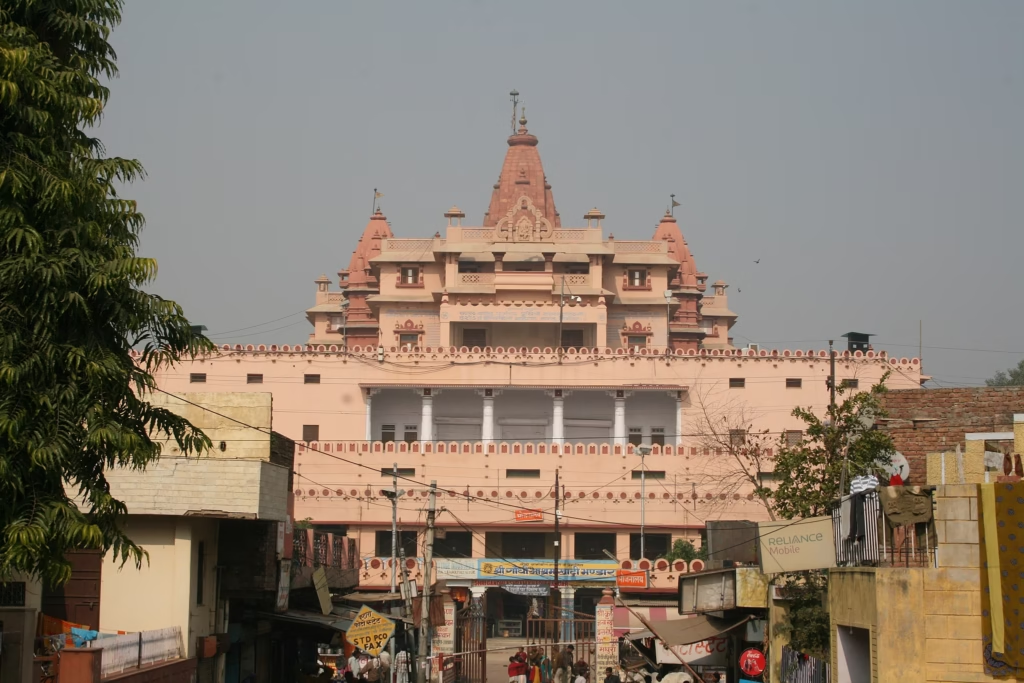
Image Credit: Diego Delso, CC BY-SA 4.0, via Wikimedia Commons
https://commons.wikimedia.org/wiki/File:Mathura_Temple-Mathura-India0002.JPG
[AMAZON AFFILIATE]
BRINGING MATHURA’S BHAKTI HOME
If you’ve ever wanted to bring a touch of Vrindavan and Mathura’s devotion into your space, start with the gentle scent of jasmine or tulsi incense sticks — it’s said Krishna loved both. Lighting them while meditating or journaling instantly creates a peaceful, loving energy.
A silver Krishna idol or flute wall hanging adds a subtle reminder of divine joy; place it near your plants or home altar — it brightens the room with grace. If you love a bit of ritual, keep a copper puja lota for offering water to your tulsi plant each morning — a practice that locals believe invites Krishna’s blessings.
And for quiet evenings, a hand-painted clay diya set inspired by Yamuna ghats brings that soft glow Mathura is famous for.
3. Haridwar — The Gateway to the Gods
If there’s one city that truly lives up to its name, it’s Haridwar, meaning “Gateway to Hari (Vishnu)”. The moment you step into this ancient city, you can feel a strange calm mixed with devotion — the kind that makes you pause and breathe a little slower.
DID YOU KNOW?
Haridwar is one of the four cities where drops of Amrit — the nectar of immortality — are said to have fallen during the great celestial battle between gods and demons. This is why it hosts the world-famous Kumbh Mela, drawing millions who come to take a dip in the holy Ganga.
The city’s spiritual roots go deep. The Devi Bhagavata Purana and Mahabharata both mention Haridwar as a sacred tirtha — a crossing point between the earthly and the divine. The most iconic spot here is Har Ki Pauri, where Lord Vishnu’s footprint is believed to be imprinted on stone. Every evening, as lamps float across the river during Ganga Aarti, it feels like time itself slows down — a reminder of why this city is one of the Sapta Puris (seven sacred cities) that grant moksha.
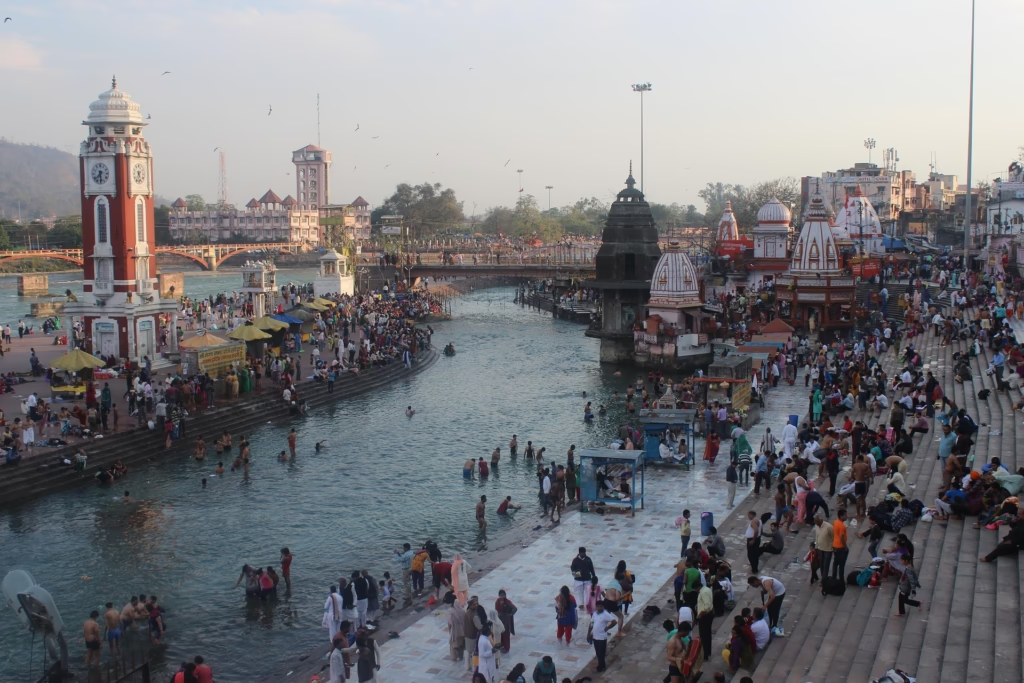
It’s said that bathing in the Ganga at Haridwar cleanses a person of all sins and breaks the cycle of rebirth. Whether you believe in it literally or see it as symbolic purification, there’s no denying the spiritual power this city holds.
4. Varanasi (Kashi) — The City That Defies Death
There are cities you visit, and then there’s Kashi — a place that feels like it’s been waiting for you forever. Known today as Varanasi, this is the oldest continuously inhabited city in the world, with traces of civilization dating back thousands of years. Ancient texts and modern archaeology both agree — life here never stopped, even when empires rose and fell.
It’s said that Kashi is Lord Shiva’s own city. The Skanda Purana goes as far as to say, “Kashi is not destroyed even at the end of time.” Locals believe that when someone takes their last breath here, Shiva himself whispers the “Taraka mantra” — the mantra of liberation — into their ear, freeing them from the cycle of rebirth. Imagine that — a city where even death is not an end, but a doorway.
Walk along the ghats of the Ganga, and you’ll see this truth reflected in daily life. The sacred Manikarnika Ghat, where cremations have taken place continuously for centuries, is not seen as morbid — it’s sacred. Here, death is not feared but accepted, because to die in Kashi is to gain Kashi Labh — instant moksha.
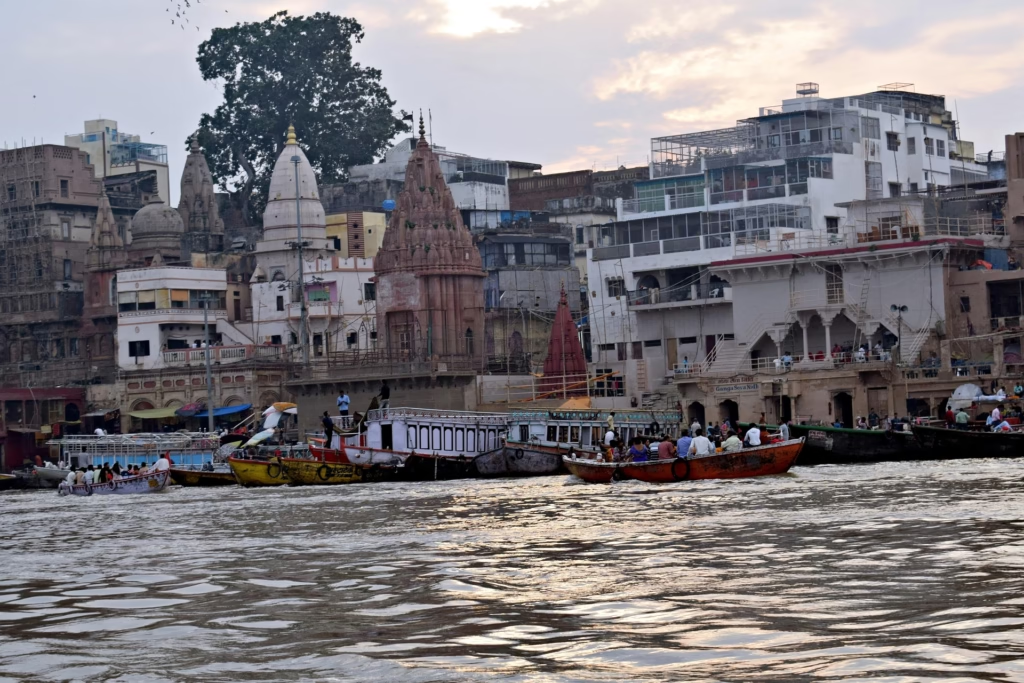
At sunrise, the Ganga Aarti at Dashashwamedh Ghat fills the air with the sound of conch shells and bells, and the city glows gold in the morning light. It’s easy to see why Kashi is said to exist simultaneously in heaven and on earth.
DID YOU KNOW?
The flame at Manikarnika Ghat is believed to have been burning for thousands of years — never once extinguished. Locals call it “The Fire of Liberation.”
If you ever visit, don’t rush. Sit by the river, watch the rituals, and let Kashi do what it does best — remind you that the soul is eternal.
5. Kanchipuram — The City of Thousand Temples
If Varanasi is the city that defies death, Kanchipuram is the city that defines wisdom. Known as the “City of Thousand Temples,” it’s not just about the number — it’s about the spiritual depth carved into every stone. Ancient texts like the Varaha Purana even call it “Mokshapuri” — the City of Liberation.
DID YOU KNOW?
Kanchipuram was once the capital of the Pallava dynasty, one of South India’s greatest patrons of art and learning. Every dynasty that touched this land — Cholas, Vijayanagar kings, and later the Nayakas — added their own layers of devotion and architecture. The result? A living museum of India’s sacred past.
The city is uniquely sacred because it honours both Lord Vishnu and Lord Shiva. On one side stands the Vaikuntha Perumal Temple, dedicated to Vishnu — said to mirror the celestial world of Vaikuntha itself. On the other, the Ekambareswarar Temple rises high, representing Shiva as the primal element — earth — one of the five forms through which he manifests.
Kanchipuram is also home to one of the four Mathas established by Adi Shankaracharya, the great philosopher who revived Advaita Vedanta. For seekers, this city offers a different path to moksha — not through rituals or devotion alone, but through jnana — spiritual knowledge and self-realization.
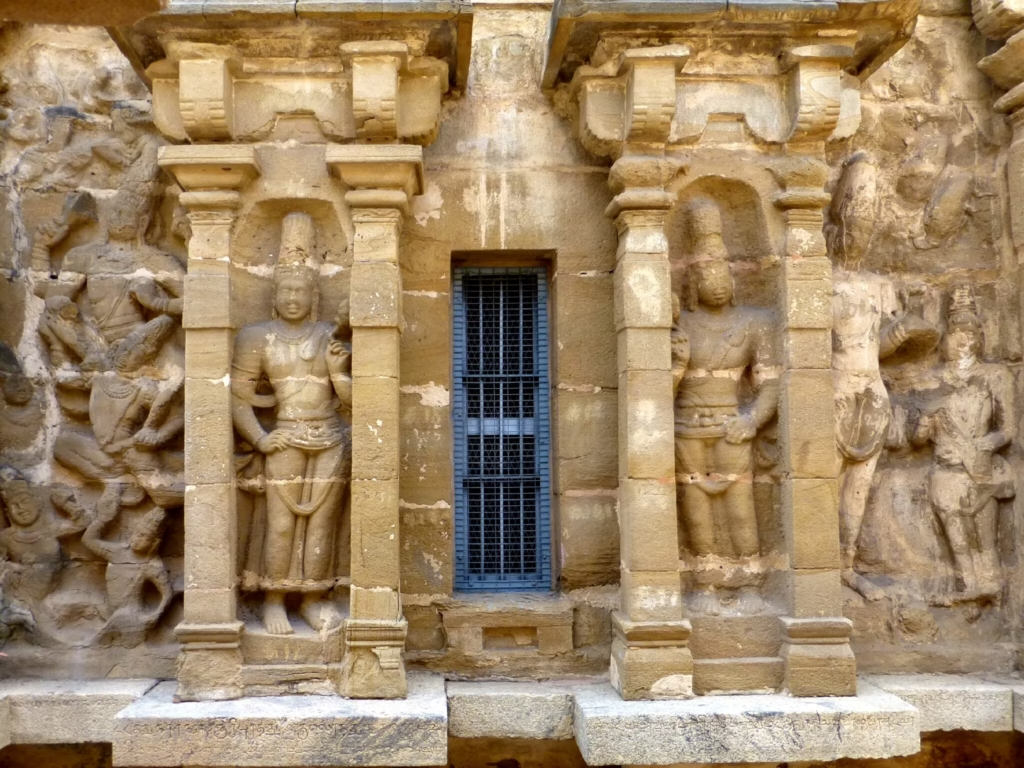
Image Credit: Hiroki Ogawa, CC BY 3.0, via Wikimedia Commons
https://commons.wikimedia.org/wiki/File:Vaikuntha_Perumal_Temple_Kanchipuram_India_-panoramio(5).jpg
When you walk through its ancient streets, with temple bells ringing and the smell of jasmine in the air, you can feel why it’s called a “Mokshapuri.” Here, liberation isn’t distant — it’s something you can think, study, and live.
And if the Vaikuntha Perumal Temple caught your attention, you’ll love exploring its deeper connection in our post on 108 Divya Desams — The Sacred Abodes of Vishnu, where we uncover the myths, architecture, and hidden symbolism behind these divine sites.
AMAZON FINDS INSPIRED BY KANCHIPURAM:
If you’re someone who loves bringing home reminders of the places you visit, Kanchipuram offers beauty you can hold in your hands. The city’s temple heritage and silk tradition have inspired countless handmade crafts.
You can find some beautiful pieces online that echo the same sacred artistry — like a handcrafted brass temple bell that fills your space with a soft, meditative sound.
6. Ujjain — The City of Cosmic Time
If there’s a city where time itself feels sacred, it’s Ujjain. Known for the Mahakaleshwar Jyotirlinga, this city honours Shiva in his fearsome form as Mahakala — the Lord of Time. Pilgrims believe that worshipping here doesn’t just bring blessings in life; it can break the cycle of time and death, offering a glimpse of liberation itself.
DID YOU KNOW?
Ujjain has been a centre of astronomy and science for centuries. The Ved Shala observatory, built by Maharaja Jai Singh II in the 18th century, still houses giant astronomical instruments used to track planetary positions. Long before that, Ujjain was considered the prime meridian of India, marking zero longitude in ancient texts — a testimony to how spiritual and scientific knowledge were intertwined.
The city also hosts one of the four Kumbh Mela sites, where devotees gather to bathe in the Shipra River, believed to cleanse both body and soul. Its streets echo legends of King Vikramaditya, whose wisdom and courage are remembered in countless stories, and it gave the world the Vikram Samvat calendar, still in use today.
Walking through Ujjain, from the ghats to the temples, you feel how past and present converge. The Mahakaleshwar Temple is not just a place of ritual; it is a centre for reflection on time, mortality, and the eternal — reminding every devotee that moksha is the liberation from the constraints of time itself.
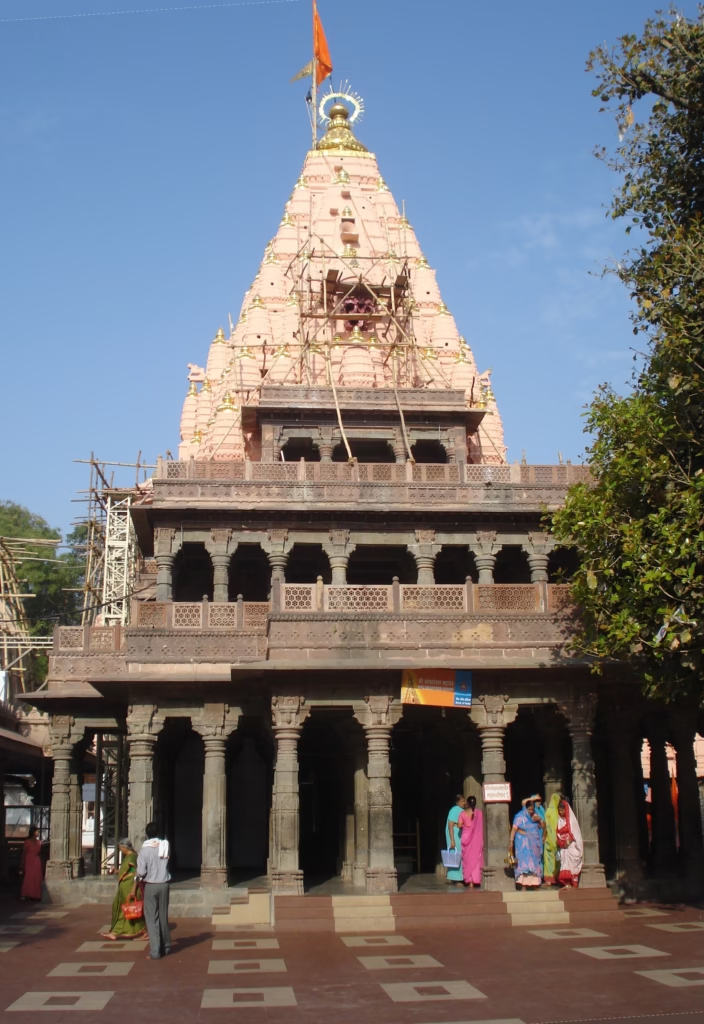
Image Credit: LRBurdak, CC BY-SA 3.0, via Wikimedia Commons
https://commons.wikimedia.org/wiki/File:Mahakal_Temple_Ujjain.JPG
If you want a deeper look at Mahakaleshwar and the other sacred sites, check out our post on Jyotirlingas: 12 Pillars of Light Across Bharat, where we explore their history, legends, and spiritual significance.
7. Dwarka — The City Beneath the Waves
If Mathura is where Krishna was born, Dwarka is where he built his kingdom and eventually prepared to merge back into the divine. According to legend, after leaving Mathura, Krishna established his city on the western coast of India — a shining example of governance, devotion, and prosperity.
DID YOU KNOW?
Modern marine archaeology off the Gujarat coast has revealed submerged structures that many believe to be the remnants of ancient Dwarka. While some debates continue, the findings add a fascinating layer of reality to the tales described in the Mahabharata and Harivamsa Purana.
At the heart of the city stands the Dwarkadhish Temple, dedicated to Krishna as the “King of Dwarka.” Pilgrims flock here not only to honour the deity but to connect with the story of Krishna’s final departure — a symbolic act of merging with the divine. It is said that those who visit and meditate here can feel the subtle energy of moksha, the soul’s liberation from worldly ties.
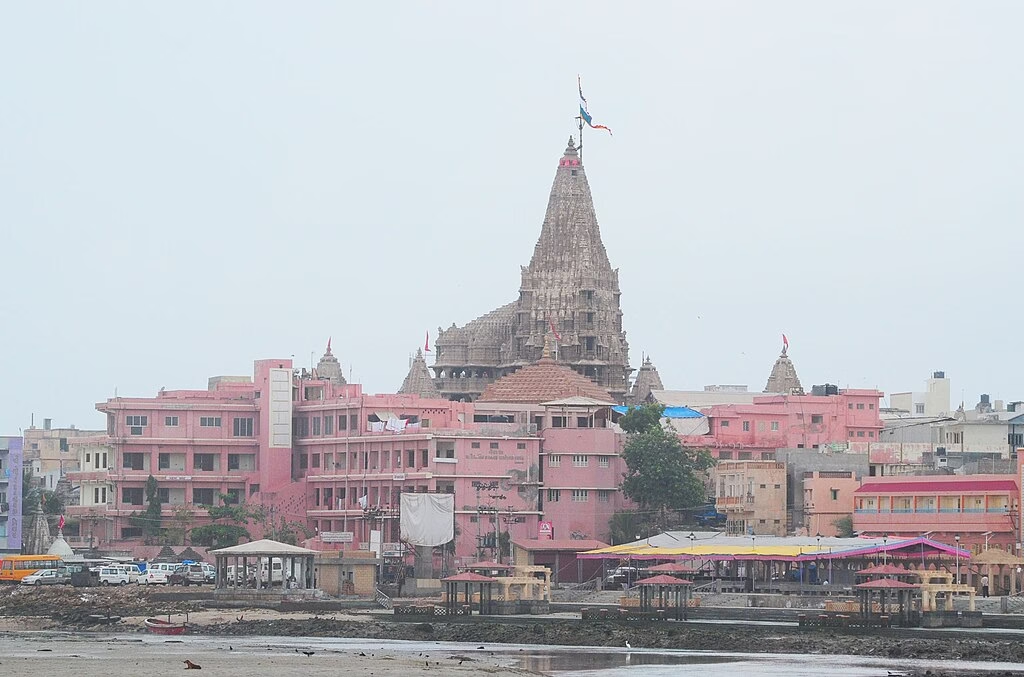
Image Credit: Jigneshgohel, CC BY-SA 4.0, via Wikimedia Commons
https://commons.wikimedia.org/wiki/File:Dwarkadish-temple-gujarat.jpg
For those intrigued by the submerged city and its mysteries, our post Krishna’s Lost City Found? The Truth About Submerged Dwarka dives into the archaeological findings, legends, and ongoing explorations — a perfect companion read for anyone fascinated by Dwarka’s eternal allure.
Conclusion: The Living Geography of Liberation
The Sapta Puri — seven sacred cities — are not just places on a map; they are milestones on the journey of the soul. Each city offers a unique path to moksha, guiding seekers through different aspects of life and consciousness:
- Ayodhya → Dharma: The city of righteous living, where duty and moral action cleanse karma.
- Mathura → Bhakti: Where love and devotion dissolve the ego and unite the soul with the divine.
- Haridwar → Shuddhi (Purification): Bathing in the Ganga here is said to wash away sins and prepare the soul for liberation.
- Kashi → Jnana: Knowledge of the eternal and the acceptance of death as transformation.
- Kanchipuram → Wisdom: Insight, learning, and contemplation as a path to self-realization.
- Ujjain → Time-Transcendence: Breaking free from the bonds of time and mortality through cosmic awareness.
- Dwarka → Detachment (Vairagya): Understanding impermanence and merging with the divine.
Traveling to these cities is less about miles covered, more about the inner journey — a pilgrimage from karma to freedom, from worldly entanglement to spiritual clarity. Each ghat, temple, and riverbank is a teacher, silently narrating the ways the soul can rise above earthly bonds.
And if you want to bring a piece of these journeys home, consider items inspired by each city — from Ayodhya’s brass Ram idols to Kanchipuram silk, or Ujjain’s meditation bells — curated thoughtfully in our Amazon picks to keep the spirit of these sacred spaces alive in your daily life.
In these seven cities, the stones still whisper — not of history alone, but of the soul’s ancient longing for release.
FAQs: Frequently Asked Questions
1. What are the Sapta Puri in Hinduism?
The Sapta Puri are the seven sacred cities of India — Ayodhya, Mathura, Haridwar, Kashi (Varanasi), Kanchipuram, Ujjain, and Dwarka. Each city is believed to grant spiritual merit (punya) and ultimately lead the soul toward Moksha — liberation from the cycle of birth and death.
2. Why are these seven cities considered sacred?
Each of the Sapta Puri is associated with a distinct path to liberation — Ayodhya represents Dharma (righteousness), Mathura Bhakti (devotion), Haridwar Shuddhi (purification), Kashi Jnana (knowledge), Kanchipuram Wisdom, Ujjain Time-transcendence, and Dwarka Vairagya (detachment).
3. Is visiting the Sapta Puri necessary to attain Moksha?
Not necessarily. The journey through these cities is symbolic — a reminder that liberation is an inner pilgrimage. Each city reflects a stage of spiritual evolution, guiding seekers from action (karma) to ultimate freedom.
4. How old are the Sapta Puri?
Many of these cities date back thousands of years, mentioned in ancient texts like the Puranas, Mahabharata, and Ramayana. Archaeological and scriptural references suggest they’ve been centres of learning, faith, and pilgrimage since Vedic times.
5. Can non-Hindus visit these cities?
Absolutely. The Sapta Puri are open to all visitors. Beyond religion, they offer a glimpse into India’s living heritage — where mythology, philosophy, and daily life still flow as one.
6. What is the deeper meaning of the Sapta Puri Yatra?
The Sapta Puri Yatra isn’t just a travel route — it’s a spiritual journey that mirrors the soul’s own path toward freedom. It transforms the traveler from a seeker of places into a seeker of peace.


